
Precast Wall Repair and Replacement Panels: What to Know
11/13/2026
A cracked or leaning panel in a precast wall is rarely a reason to rebuild the whole thing. Often one panel can come out and a new one can go in, if you diagnose the damage correctly and find a panel that fits.
Slabs & Walls is a South African supplier of precast concrete walling, slabs and paving, so this guide is written from the supplier's side of a replacement order. It covers how to judge the damage, how to match a new panel to an old run, what to prepare before you ask for a quote, and what moves the price.
Concrete Wall Repair in South Africa: Identifying the Damage
Start by walking the whole wall, not just the panel that caught your eye. Damage next to the obvious break often tells you why it happened.
These are the signs that matter:
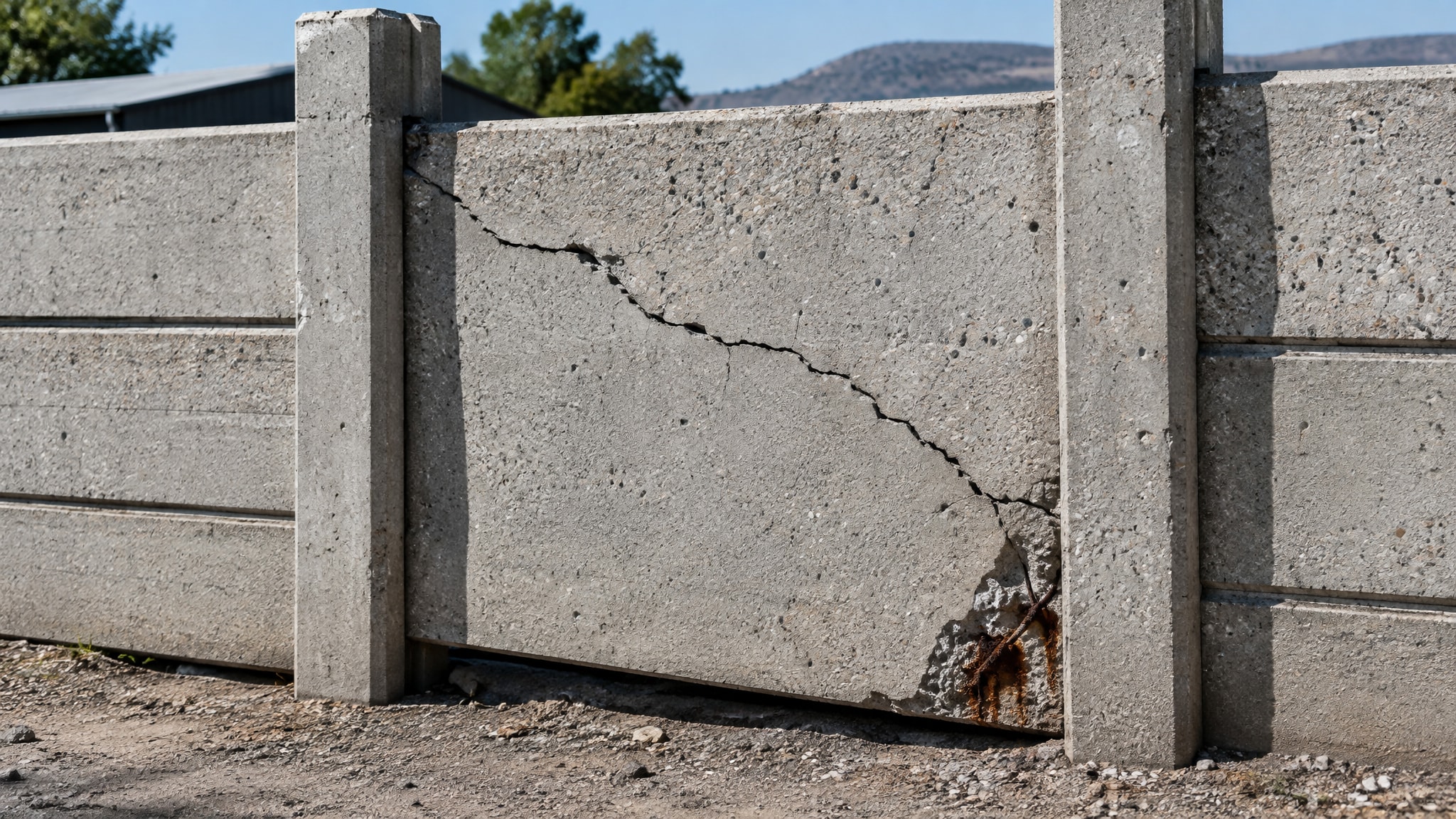
- Cracks running through a panel. A crack that goes from edge to edge or through the thickness is structural. A fine surface line is not.
- Chipped or crumbling edges with rust staining. Rust stains mean water has reached the steel inside, and the concrete around it will keep breaking away.
- A panel that leans or has slipped in its grooves. Look for gaps at one side, a panel sitting lower than its neighbors, or a visible step along the top of the run.
- Cracked or loose posts. Push gently on each post. Any movement, or a crack running across a post, is a separate problem from the panel.
A panel swap cannot fix a post or footing problem. General construction practice is to check the posts and footings before ordering a panel, because a new panel cannot correct movement underneath it. If the wall leans, a post is cracked or a panel has slipped out of its grooves, find out why before you spend money on stock.
You will also save yourself a second purchase by looking for the cause. A panel hit by a vehicle is a one-off. A panel that cracks because the footing is settling will crack again.
Precast Wall Repair or Full Replacement: How to Decide
Three tests settle most cases. Is the panel sound behind the damage? Does it still sit firmly in its grooves? Are the posts and footings steady? Two yeses and a no on the posts means the panel is not your real problem.
When a Surface Repair Is Enough
Hairline cracks and small surface chips can often be patched. If the panel is solid when you tap it, sits tight in its grooves and the damage stops at the surface, a repair mortar or concrete patch is a reasonable fix.
Patching has limits. It restores the look and seals the surface, but it does not give back strength to a panel that has cracked through. Clean out loose material first, and treat any exposed steel before you fill, or the rust will push the patch off again.
When the Panel or Whole Run Needs Replacing
A crack through the panel, or a panel that has loosened in its grooves, usually calls for replacement. A cracked panel can drop out in a storm or a knock, and a loose one is already moving.
Consider a typical case. One panel on a boundary wall cracks after a vehicle or a falling branch hits it, while the posts and neighboring panels stay sound. That is a single-panel swap, and the open question is whether a matching panel can be sourced.
If it cannot, replacing the whole run is worth weighing. One new panel in an old wall can stand out for years, and some owners would rather pay once for a uniform wall. If you are weighing a change of walling type instead, choosing walling for your property covers the options.
Matching Precast Panels to an Existing Wall
Matching is two separate checks, and a panel can pass one and fail the other. The new panel must fit the existing posts and grooves. It must also look right beside the old run.
Size, Thickness and Fit
Measure the real gap between the posts and the real depth of the grooves. Do not trust the size of the old panel, because panels shrink at the edges as they chip, and walls shift slightly over the years.
Take the height, width and thickness of the panel, then the groove depth at the top and the bottom of the post. If you are comparing against standard sizes, precast concrete slab sizes and uses is a useful reference for your own numbers.
A panel that is a few millimeters too thin can rattle in the groove. One that is too wide will not go in at all.
Color, Finish and Weathering
Panels cast from the same mix can look different once one has weathered for years in sun and rain. A new panel often stands out beside an old run even when the size is right.
You can reduce the contrast, but you cannot remove it entirely. Judge color in daylight, not under a shop's lights, and hold any sample against the old wall rather than against a photo. The color and finish options for precast wall panels explain what is available.
Expect some difference at first. New concrete is usually lighter and cleaner than a wall that has stood for a decade, and it will tone down with exposure.
Replacement Panels: What to Prepare Before You Order
A supplier cannot quote a panel from a description like "the grey one on the left". The more exact your details, the fewer surprises on delivery day. This list works for a homeowner replacing one panel and for a builder ordering a whole run.
What to Measure and Photograph
Gather these before you contact anyone:
- Panel height, width and thickness
- Groove depth in the posts
- The total length of the run
- The number of panels needed
- The finish, with a photo of the panel in daylight
- Site access: how close a truck can get, and whether the panels have to be carried through a gate or up a slope
Photograph the damaged panel, the panels on either side, and the posts. Take one wide shot of the wall as well, so the supplier can see the finish against its surroundings.
Questions to Ask a Supplier
Put these to any supplier, including us:
- What is the lead time?
- If an exact match is not available, is the closest profile offered?
- Does the quote include delivery and fitting, or only the panels?
- Can finish samples be viewed before you commit?
The second question matters most for older walls. Profiles change over time, and an honest answer about the closest available option is better than a panel that nearly fits.
If you want a quote from Slabs & Walls, send the panel measurements, a daylight photo of the damaged panel, the wall's location and the number of panels needed, and the team will quote from that.
Broken Wall Panel Replacement: How the Job Is Done
Replacing a panel is physical work, and some of it is awkward. A precast panel is heavy, and it sits in grooves that may be packed with old mortar and debris. Read the whole process before you decide who does it.
Damaged Boundary Wall Fix: Checks Before You Start
If the damaged panel is on a boundary, check three things first.
Height rules. Your municipality may set limits on boundary wall height. Replacing a panel like for like usually keeps you where you were, but a taller or different wall may not. See municipal wall height rules and confirm with your local council.
The neighbor. If the wall is shared, tell your neighbor before work begins. You will be working on their side, and they may share the cost.
The posts. If a post is cracked, loose or leaning, this is no longer a simple panel job.
If those checks are clear, the work goes in this order:
- Make the area safe. Clear people, pets and vehicles from both sides of the wall.
- Support the wall. Brace the neighboring panels and any posts beside the damaged one.
- Free the old panel from its grooves and lift it out. Break up any packed mortar carefully rather than forcing the panel.
- Clean the grooves of old mortar, soil and debris.
- Set the new panel into the grooves and level it.
- Seal the joints so water cannot get behind the panel.
A contractor is the better call for heavy lifts, tall walls or any post work. You need to be honest about your own limits here, because a dropped panel is dangerous and expensive. Even a confident DIYer should not lift a full-height panel alone.
Wall Panel Replacement Cost: What Drives the Price
No single price fits every wall, because several things move the total at once:
- Panel size, thickness and finish. A larger, thicker or more finished panel costs more.
- The number of panels. This includes whether you replace a whole run to match, rather than one panel.
- Delivery distance and site access. A long haul, or a site where the truck cannot get close, adds cost.
- Post or footing work. If posts need repair or footings need redoing, that work can outweigh the panel itself.
The last item catches many homeowners out, and it is the reason to inspect the posts before you ask for a quote. A single panel swap and a full run with post repairs can sit a long way apart on price.
For current ranges, see walling prices in South Africa. To get a figure for your own wall, send us the measurements, a daylight photo, the wall's location and the number of panels.
Maintenance to Prevent Repeat Panel Damage
Most repeat damage starts with water or movement, and both show up early if you look. Check the joints, grooves and drainage at the base of the wall a couple of times a year, and after heavy rain.
Catch cracks while they are still hairline. A crack you seal now is a patch job. The same crack left through a few wet seasons can become a replacement.
Keep vegetation and roots clear of the posts. Climbers hold moisture against the concrete, and roots can push a post or footing out of line over time.
Keep a record of each panel too. Write down its size, finish and supplier, with the date and a daylight photo. When a panel breaks in five years, that note makes the next match much easier.
Frequently asked questions
Can I replace just one damaged precast wall panel?
Yes, if the posts and neighboring panels are sound and a panel that fits your grooves can be found. A single panel swap suits damage from a vehicle or falling branch. If the posts are cracked or the wall leans, fix that first, because a new panel cannot correct movement underneath it.
Will a new panel match my old wall?
It will fit if you measure the real gap and groove depth, but the look may differ at first. Panels from the same mix can look different once one has weathered for years, and new concrete is usually lighter. Judge samples in daylight against the old wall, and replace the whole run if a single panel would stand out.
What do I need to send a supplier for a replacement panel quote?
Send the panel height, width and thickness, the groove depth, the number of panels, the finish, a daylight photo of the damaged panel and the wall's location. Without these, a quote cannot be accurate. Slabs & Walls works from the measurements, a daylight photo, the location and the number of panels.
Do I need permission to replace a panel on a boundary wall?
It can be needed. Municipal height rules may apply, and a shared wall calls for agreement with your neighbor. Check with your local council before work begins, especially if the new wall will be a different height.
Should I replace a wall panel myself or hire a contractor?
A single, low panel with sound posts is within reach of a careful DIYer with help. Hire a contractor for heavy lifts, tall walls or any post work. Precast panels are heavy, and a dropped panel is a safety risk.