
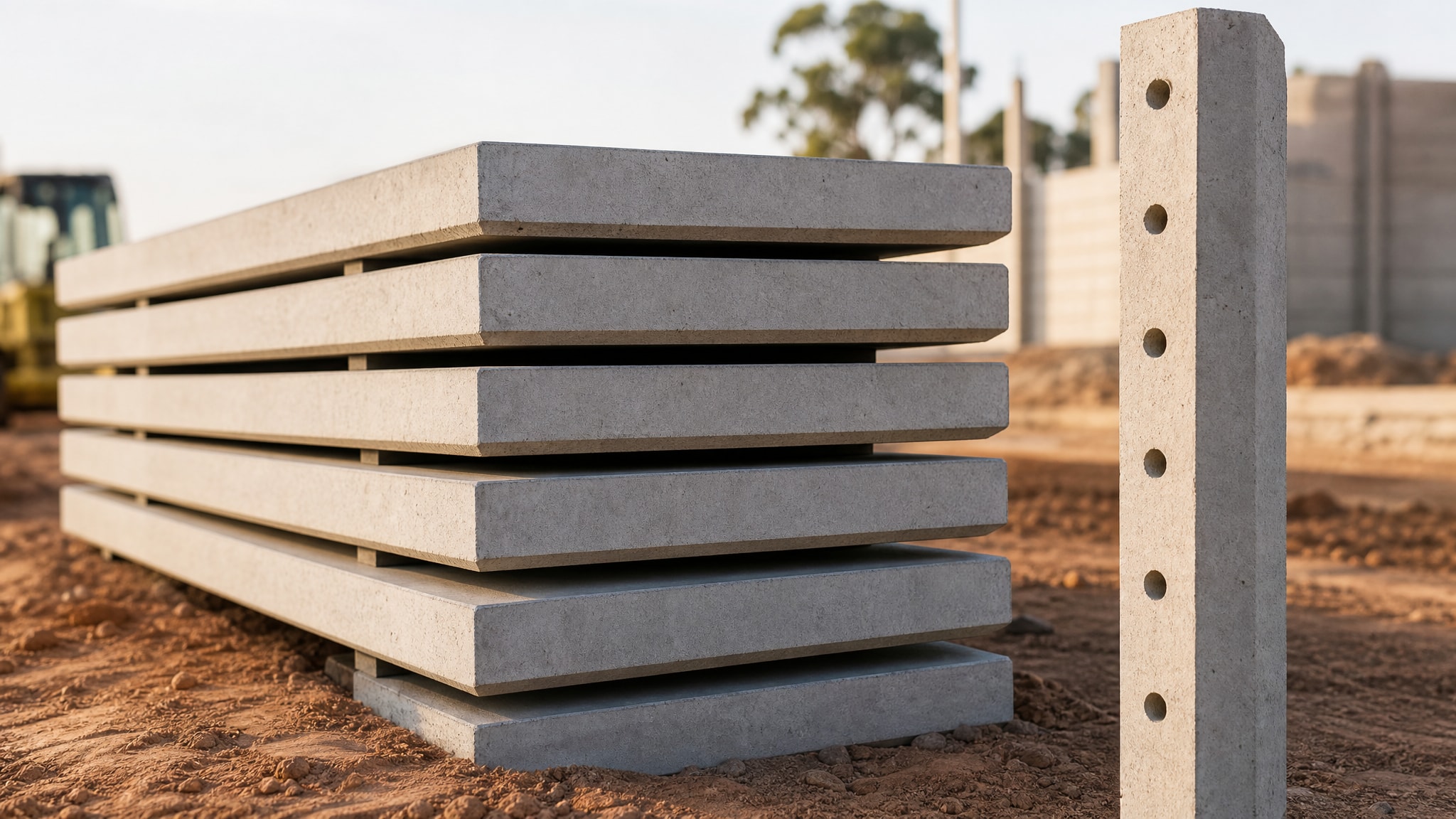
Precast Concrete Slabs for Sale: Sizes, Uses & Prices
9/22/2026
Sourcing precast concrete slabs in South Africa means matching specific dimensions to your project before you request a quote, not wading through vague listings. Builders and homeowners need clear specifications to work out whether a slab suits boundary walling, paving, or general construction. Slabs & Walls supplies precast concrete products designed for South African boundary walling and security fencing systems, alongside units suitable for landscaping and structural bases. This guide covers standard sizing, application suitability, and how to get current stock and pricing from our team.
Available Precast Slab Sizes and Specifications
Selecting the correct unit starts with understanding how factory-moulded dimensions line up with local building practices and modular coordination standards. Standard precast slab sizing generally follows modular construction dimensions, which speeds up assembly and cuts on-site cutting waste. That keeps labour costs predictable for contractors working on fixed-price tenders. Check that your chosen specification fits both your site's physical constraints and the load-bearing requirements of your structure before you place an order.
Standard Dimensions for Construction
Precast slabs come in set lengths and widths that correspond to common spacing between columns or wall uprights. Lengths run from shorter units for infill panels to longer spans for roofing or flooring, while widths are standardized for efficient transport and handling on site. These dimensions match standard brickwork courses and steel column centres used in South African residential and light commercial construction.
Deviate from these standard modules and you usually need custom moulds or extensive on-site trimming, both of which add cost and time.
Thickness Options and Load Ratings
Thickness sets the structural capacity and weight of each slab, which drives its suitability for different jobs. Thinner profiles suit non-load-bearing roles such as cladding or fencing infill, while thicker sections carry the mass needed for paving driveways or supporting floor loads. Manufacturers grade units by the pressure they can take without cracking, so confirm the load rating against your engineering specifications rather than assuming slabs of similar size all perform the same.
Common Applications for Precast Concrete Slabs
Different projects need different material properties. Use a paving slab for a fence, or a fencing slab for a driveway, and it fails early. Matching the product to its function protects longevity and keeps you within safety standards, which avoids costly replacements later. We regularly see buyers cross-reference dimensions against these use cases before ordering.
Boundary Walling and Security Fencing
Boundary walling relies on slabs that slot vertically into precast columns to form a solid, secure perimeter. These units run thinner and lighter than structural slabs because they only need to resist wind loads and minor impact, not vehicular traffic or heavy vertical compression. The smooth finish and consistent height of factory-cast fencing slabs give a uniform look that site-cast walls rarely match, which is why they're the preferred choice for residential estates and industrial security perimeters across the country.
Paving and Landscaping Projects
Paving slabs differ from fencing units in both density and surface texture. They need higher compressive strength to handle pedestrian or vehicular loads, and often carry textured finishes to prevent slipping when wet. Landscaping jobs also favour larger format slabs, since fewer joint lines make for cleaner visual planes in gardens or patios. Even so, your sub-base preparation has to match the slab's load rating, or you risk settling and cracking over time.
Concrete Slab Prices in South Africa
Concrete slab prices in South Africa move with raw material costs, manufacturing complexity, and logistics, not a single fixed tariff. Cement and aggregate markets shift regularly, so any published price list goes stale fast. That's why we quote on request rather than keeping static prices online. Your final cost per unit depends heavily on the specific combination of size, thickness, and delivery location you need.
Factors Influencing Cost Per Unit
Thicker slabs use more raw material and need longer curing times, which pushes up their base manufacturing cost compared with thinner alternatives. Surface finishes matter too: exposed aggregate or textured faces need extra processing steps, which adds to the unit price. Transport distance affects landed cost as well, since concrete is heavy and fuel expenses scale directly with the distance between our yard and your site.
Bulk Pricing for Contractors
Order volume has a real effect on the rate you pay per slab. Full truckloads or large-scale project orders spread fixed handling and transport costs across more units, which lowers the marginal expense per piece. Contractors planning multiple sites or phased developments should consolidate their requirements into fewer, larger orders to capture this saving. Weigh that against your on-site storage constraints and cash flow timing before you commit to a bulk order.
Why Choose Precast Over Cast-In-Situ Concrete
Precast concrete slabs cure in controlled factory conditions, which gives more consistent results and faster installation than site-cast alternatives, according to standard industry practice for precast manufacturing. On-site pouring exposes fresh concrete to unpredictable weather, variable workmanship, and inconsistent mix quality, all of which add risk to your build schedule. Factory-produced units arrive cured and ready to use, so you skip the wait for site-cast concrete to reach adequate strength.
That speed advantage compounds on projects with tight deadlines or limited skilled labour. You can put up boundary walls or lay paving in days rather than weeks, which frees crews to move to the next trade sooner. Precast won't suit complex curved geometries or monolithic structures that need continuous reinforcement, but for repetitive modular applications, where predictability matters more than bespoke formwork, it beats cast-in-situ methods.
How to Buy Concrete Slabs from Slabs & Walls
We operate as part of the Top Choice group and handle enquiries directly, so you get accurate, current information rather than generic estimates. Stock levels and pricing change often, so we don't publish live inventory or fixed rates online. Every quote reflects real-time availability and your specific delivery requirements, which saves you the frustration of ordering something no longer in production or priced at an outdated rate.
Requesting a Stock and Price Quote
Contact us with your required slab type, dimensions, quantity, and delivery address to get a formal quotation. Include any engineering specifications or project drawings if you're unsure about load ratings or compatibility, since this helps us recommend the right product for your needs. Our team responds with current lead times and pricing, so you can make procurement decisions without guesswork.
Delivery and Collection Options
You can arrange collection from our yard if you have transport capable of handling heavy, brittle loads safely. For most trade and residential buyers, though, delivery through our contracted transport partners is more practical and cuts the risk of damage in transit. Confirm access constraints with us when you request your quote: narrow driveways, overhead obstructions, or soft ground can all affect vehicle selection and offloading.
Installation Guidelines and Best Practices
Proper handling and installation protect your investment and keep the finished structure performing as intended. Store slabs flat on level ground with uniform support underneath, to stop warping or cracking before installation. Never lean them unsupported against walls or stack them unevenly. Use proper lifting equipment or enough manual labour to move units safely, since concrete is dense and a sudden impact can cause edge damage that can't be repaired.
Follow the manufacturer's recommendations for joint spacing and bedding materials specific to your application. Boundary wall slabs need clean slots in columns and flexible sealant at joints to allow for thermal movement, while paving slabs need compacted sub-bases and proper edge restraint to stop lateral spreading. Cut with diamond-tipped blades made for reinforced concrete, and wear proper PPE throughout installation to manage dust and debris.